


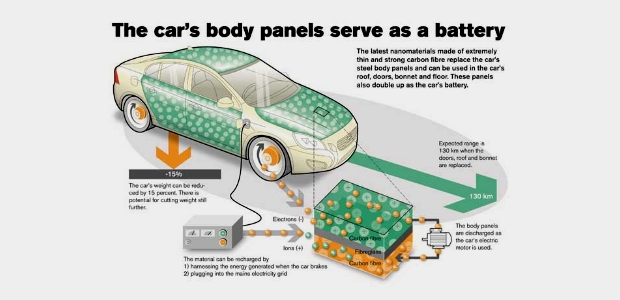

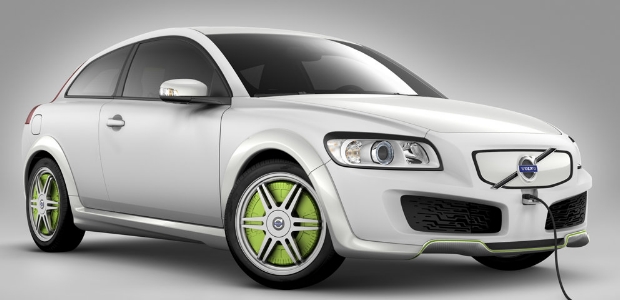










Volvo has developed a new concept for storing electrical power using car body panels instead of a traditional battery. It may be a few years away from production, but it’s a very smart concept. Volvo is working together with independent research groups to develop a means of energy storage for future electric cars that does away completely with traditional battery and super capacitor systems, which typically carry considerable weight and take up a lot of space. The solution is a new type of material that integrates nano-structured batteries and super capacitors together with carbon fibre, which can be formed into body panels for a car. Read more
The simple truth is that presently EVs are not a comprehensive solution for all our transportation needs, instead it’s an option that will satisfy only some of our basic requirements. Current Electric Vehicle (EV) limitations are beyond obvious. The challenges of short ranges, long charge times, and hefty price tags indicate that answering the “How far, how long, how much?” EV riddle is still a complex one. As in: – How far can I drive my EV on a single charge? – How long does it take to completely charge my EV? – How much does my EV cost me? Read more
The public’s apathy for electric vehicles might turn out to be a good thing, with experts once again claiming that charging chemical car batteries using electricity from coal-fired power stations generates more pollution than building and running regular combustion engine vehicles. Read more


